Your
Severe Weather Protection Plan.
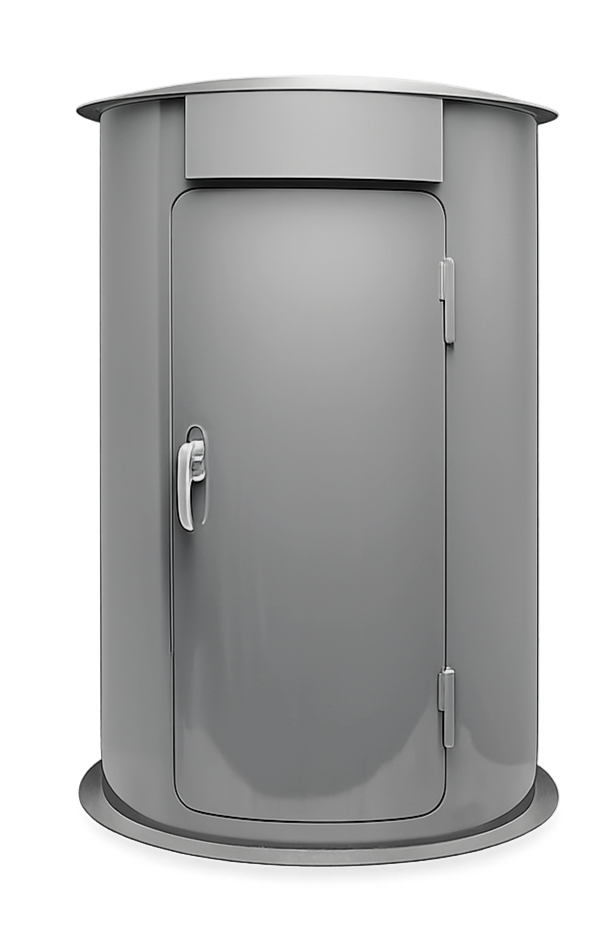
Building Trust, Protecting Families, and Leading with Integrity
As severe weather expands into new regions, resilient above-ground tornado shelters are becoming a smart, practical, and empowering investment for property owners.We aim to make tornado protection accessible and convenient, so you can be prepared well before the storm.Our mission is simple: protect families with dependable storm shelter solutions and provide exceptional customer service.When severe weather strikes, have confidence knowing your family has a safe place to shelter.
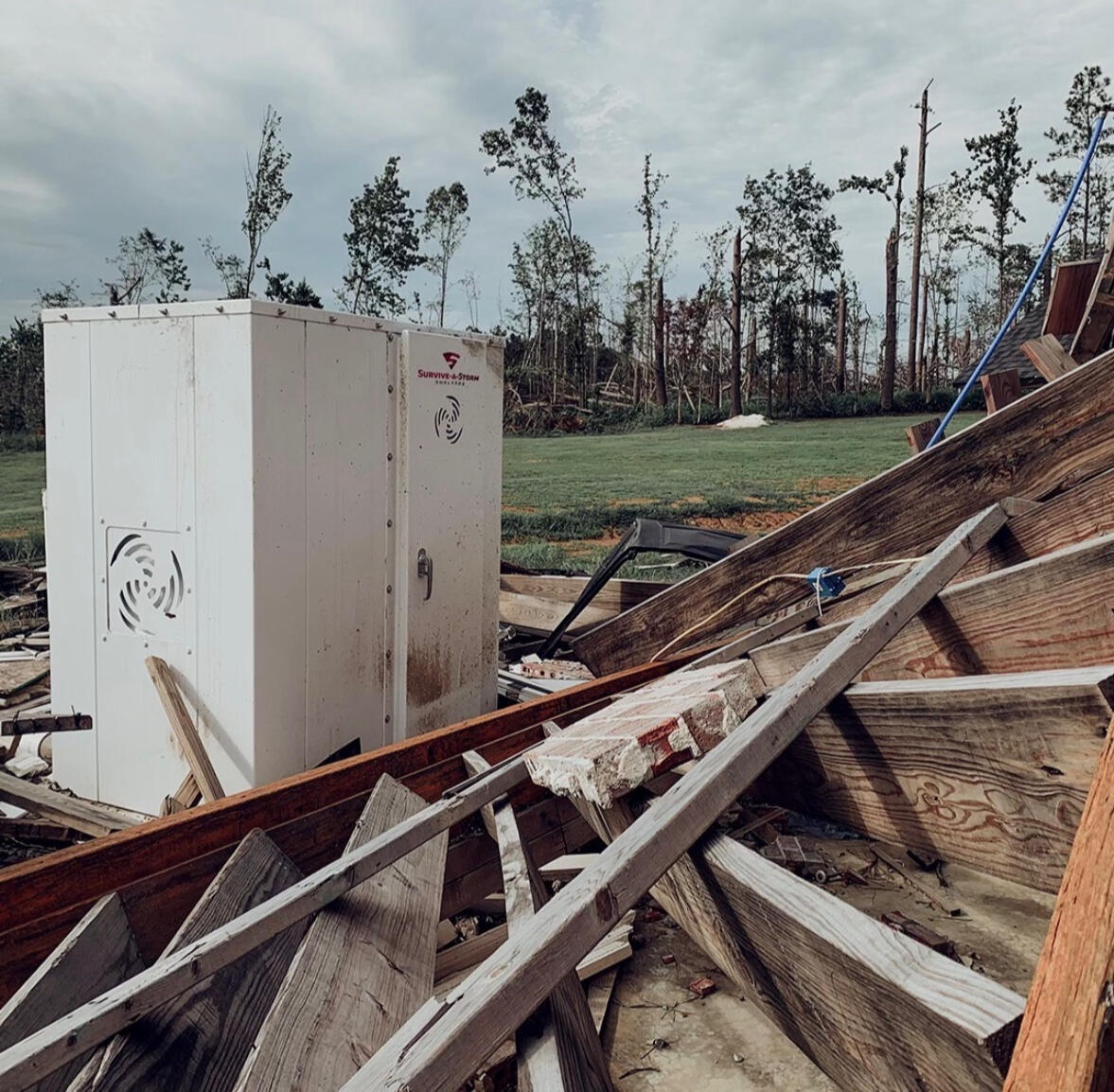
We provide and install the full line of
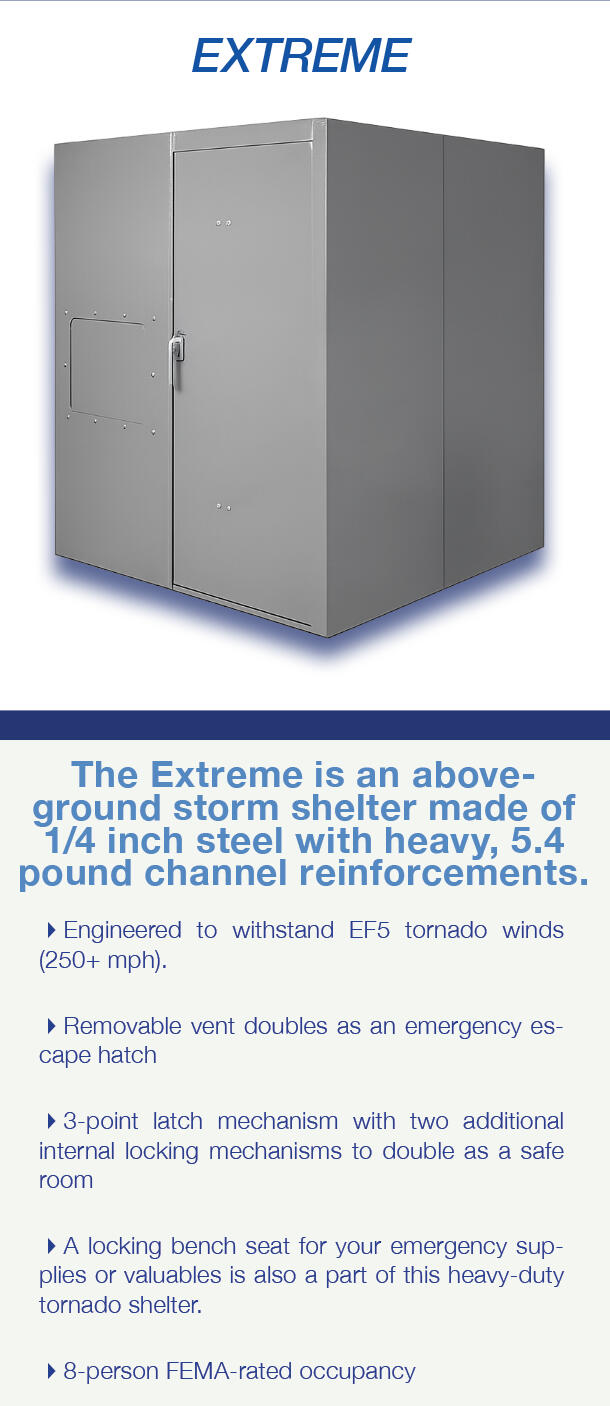
Survive-a-Storm above-ground residential and community storm shelters.
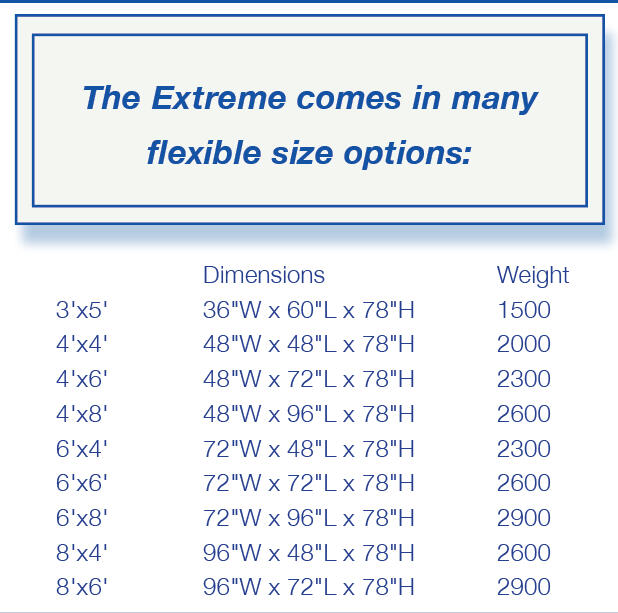
We provide shelters that are a reliable defense against unpredictable weather, engineered and tested to withstand an EF5 tornado.There are many flexible size options and layouts to fit the unique needs of every family, business, or community.Designed to optimize space, add value to your home, and enhance your safety.
Once you decide the shelter that best fits your needs, reach out to us to schedule your install.We can provide a quick turnaround time for installations, saving time and getting you prepared early. Not only that, but we make the installation process simple and efficient.Our NSSA Certified installer, Miguel, has been installing shelters for 4+ years. He has led a team of installers (his sons, Liam and Aaron) to provide service and protection for thousands of individuals.While Miguel is on site, he can help pick the best spot for your shelter, answer any and all questions, and will go over how to use your shelter, how to upkeep it, and cover warranty details.
If you're interested in a storm shelter for your home, business, or community, please reach out to us through the Contact Form below:
Be sure to let us know where you're located!
Frequently Asked Questions
Shelter FAQ
When is the best time to buy a storm shelter?
The best time to buy a tornado shelter is before tornado season strikes. The slow season for shelter manufacturers is September through February, which makes it the ideal time to buy a shelter. Waiting until the first tornado hits may be too late.
If I have a basement or interior bathroom why do I need a storm shelter?
Tornadoes can be strong enough to destroy houses, and tear up even the strongest floor framing. Flying debris can punch through wood beams in excess of eight inches thick. Survive-A-Storm residential storm shelters have been tested to withstand an EF5 tornado, and are manufactured to be in compliance with FEMA 320 standards.
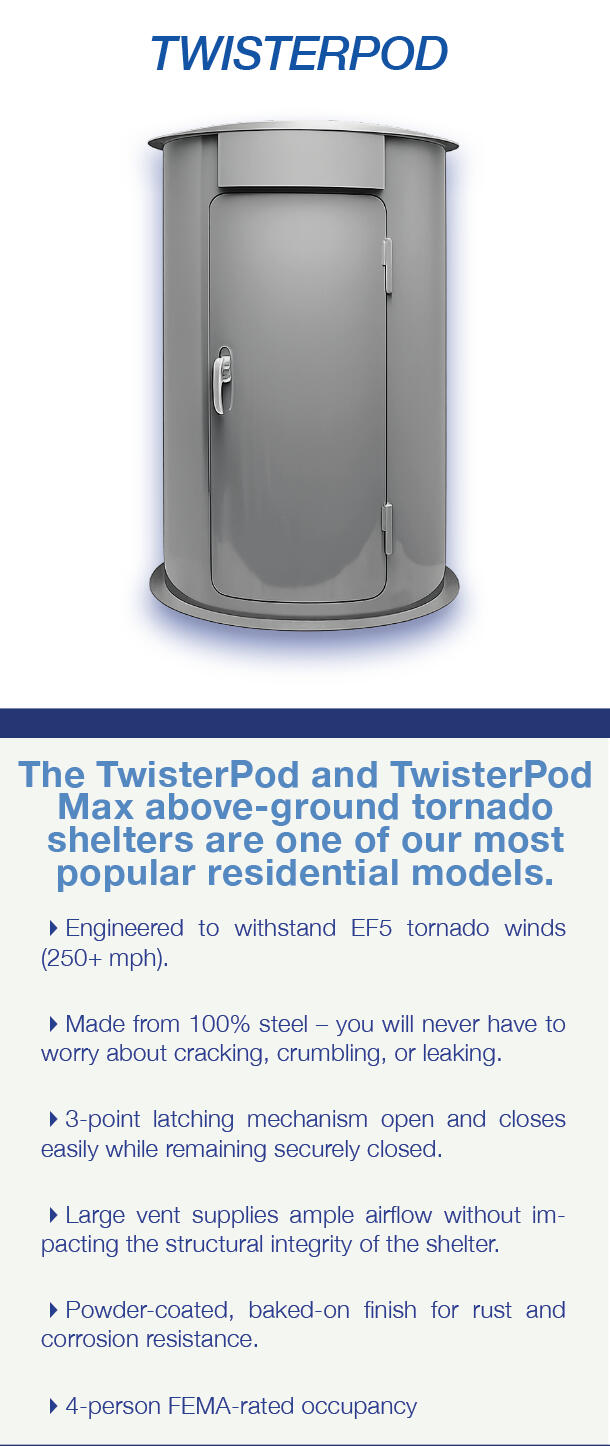
Where can I put a TwisterPod or Extreme safe room?
Our storm shelters can be installed in almost any location. Depending on the model, they can be buried outside, installed in garages, or assembled in basements. Most garages, carports, or patios can accept either model.
Why is it important for a storm shelter company to be an NSSA member?
The NSSA (National Storm Shelter Association) is a member-directed organization comprised of the leading tornado shelter manufacturers. By being a member, you are held to highest Engineering and ethical standards and your shelters are placed under scrutiny through Engineer peer-reviews. There has never been a NSSA member’s shelter fail in the many EF5 tornadoes to which they have been subjected.
Which items should I keep inside my storm shelter?
It is important to keep emergency items in your storm shelter and for this reason, most of our tornado shelters come equipped with a bench that has a locking storage lid. We recommend that you keep a flashlight with extra batteries, NOAA weather radio, important insurance documents, backups of any photos/videos, MREs, water, first aid kit, horn and extra medicines.
What is the advantage of steel tornado shelters over concrete tornado shelters?
As the saying goes, “there are two types of concrete–concrete that has cracked and concrete that is going to crack.” Concrete shelters hold moisture and leak and all of our steel storm shelters are designed with a proprietary leak test that eliminates the concerns for any leaking.
Shelter Construction FAQ
Are your units FEMA 320 and/or FEMA 361 compliant?
All of our residential storm shelters are FEMA 320 compliant and all of our commercial shelters are FEMA 361 compliant.
Are your units ICC500 compliant?
Yes, all of our storm shelters are ICC-500 compliant.
Have your units passed the Texas Tech wind research institute testing replicating an F5 storm?
Yes, all of our tornado shelters have undergone simulated tornado testing.
What is the gauge of steel?
Our shelters are designed with steel thicknesses between 10 gauge, 3/16″ and 1/4″ depending on the shape of tornado shelter, location of steel and application. All of our shelters have been tested and Engineered to withstand an EF5 tornado.
How are your storm shelters vented?
FEMA 320 and ICC 500 require that tornado shelters provide four square inches of vent per occupant. All of our tornado shelters meet or exceed this.
What keeps the door on your tornado shelters from opening in a storm?
All of our tornado shelters have a three-point locking system to assure that if one lock is compromised, we have two backups to assure you safety.
Are your tornado shelter doors lockable from the outside?
Yes, our shelters can be locked from the outside so that valuables can be kept inside your shelter. It is, however, impossible to be locked inside our tornado shelters because the inside lever operates independently from the exterior lock.
How does the tornado shelter door open if debris falls on it?
Some of our storm shelters are designed with an inswing door. The other tornado shelters we offer all have a provision to install an optional jack to pry the door open should debris block the entrance.